

Hazardous Materials
Chemical and Material Handling on Campus
Sonoma State University is a dynamic campus that supports a wide range of activities, from classrooms and administrative offices to scientific research laboratories, art studios, and the day-to-day operation and maintenance of campus buildings and grounds. Our facilities span several decades, with some buildings dating back to the 1960s and others recently constructed or extensively renovated. As a result of these diverse activities and building types, hazardous materials may be present throughout campus. When properly managed and left undisturbed, these materials do not generally pose a risk to building occupants. Sonoma State University is committed to providing a safe environment for students, faculty, staff, and visitors by managing hazardous materials in accordance with applicable regulations and established environmental health and safety practices.
This page provides important information and can direct you to more information about hazardous materials that may be present in campus buildings and your responsibilities while on campus.
Hazardous Materials Topics
Many buildings constructed before the 1990s contain asbestos-containing materials (ACM). At SSU, these materials are identified, monitored, and managed through an established Asbestos Management Program in accordance with applicable federal and state regulations.
Asbestos may be found in building materials such as:
- Drywall and wall joint compound
- Pipe and boiler insulation
- Floor tile and flooring adhesives
- Ceiling materials
- Roofing materials
- Fireproofing and other building components
When asbestos-containing materials are in good condition and left undisturbed, they do not present a health hazard. The greatest risk occurs when these materials are damaged, drilled, cut, sanded, broken, or otherwise disturbed, potentially releasing asbestos fibers into the air. Do not disturb materials that may contain asbestos under any circumstances. Facilities Management employees are trained in how to safely work with and around asbestos, when necessary. Please contact EH&S or Facilities Management to perform building maintenance or hang pictures or other materials.
For a map of which buildings are known to contain asbestos and about the university's Asbestos Management Program, please visit the Asbestos & Lead program website.
Some campus buildings, particularly older facilities, may contain lead-based paint. Most, if not all, lead paint on campus has been painted over and is encapsulated in safer materials.
There are no known lead plumbing infrastructure on campus.
Lead-containing paint that is in good condition and left undisturbed does not generally present a health hazard. However, activities such as sanding, scraping, drilling, cutting, or demolition can generate lead dust or debris that may pose health risks if inhaled or ingested.
To protect yourself and others:
- Do not disturb painted surfaces or building materials that may contain lead.
- Do not perform maintenance, renovation, or demolition work. Only Facilities Management or authorized contractors may perform such work.
- Report deteriorating paint, damaged building materials, or renovation activities that appear to be generating excessive dust to Facilities Management or Environmental Health & Safety (EH&S).
If you have questions about where lead paint may be found on campus, please contact Environmental Health & Safety.
Hazardous materials may be present throughout campus for a variety of purposes related to maintenance, including:
- Custodial cleaning and disinfecting products
- Building maintenance supplies
- Paints, adhesives, and solvents
- Compressed gases
- Pesticides and herbicides
- Shop and maintenance materials
- Water treatment and pool management
- Other regulated hazardous materials
EH&S works with campus departments to identify the least hazardous materials that are effective for the job, safe storage and use practices, and materials security. Only chemicals approved by EH&S can be procured and used on campus.
Immediately report any concerns about maintenance related hazardous materials.
The School of Science, Business, and Technology manages numerous chemicals and hazardous materials used in scientific research and instruction. These materials are carefully managed by faculty, instructional support technicians, and research staff in specific facilities designed to safely manage those chemicals and with procedures for their safe use.
Only employees or students who are trained and authorized to access hazardous materials on campus for scientific purposes may do so. All authorized employees and students are required to ensure the safe handling and storage of hazardous materials to ensure only authorized persons can access them.
Immediately report unsafe material handling to the appropriate faculty or to Environmental Health & Safety.
Visit our Chemical Hygiene program page for more information.
The studios that support the artistic work of our students and faculty contain hazardous materials to support that work. Art studios may contain hazardous materials associated with photography, painting, printmaking, sculpture, ceramics, welding, woodworking, and other creative activities.
These materials may include paints, pigments, glazes, inks, solvents, adhesives, acids, compressed gases, metal compounds, silica-containing materials, and other specialty chemicals used in instruction and artistic processes. Compressed gases are also present and used in welding and cutting of metals, activities that can also create hazardous fumes.
Only students and employees who are trained in the proper use of these materials may access them. Please report any unsafe studio conditions to faculty, the academic department, or to EH&S directly.
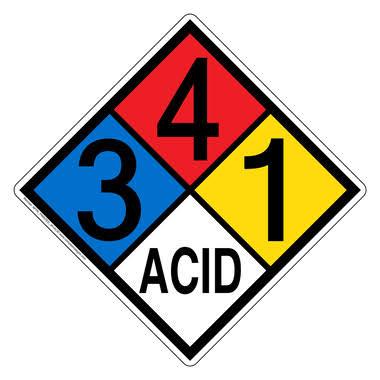
The university observes widely accepted and legally compliant systems to identify where hazardous materials are stored and used. Be on the lookout for these communication systems to know where materials are present.
NFPA Hazard Diamonds
Fixed chemical storage areas display the National Fire Protection Association Hazard Diamond. The diamond communicates hazards important for emergency response and safety, including a color coding system, identifying the type of hazard, and a numeric identifier, identifying the relative risk of the hazard. The colors are:
- Blue - health hazard
- Red - flammability hazard
- Yellow - reactivity hazard
- White - special hazards such as oxidizers
The number identifiers range from 1, meaning slight risk or minor hazard, through 4, indicating a severe or extreme risk.
GHS Chemical Labels
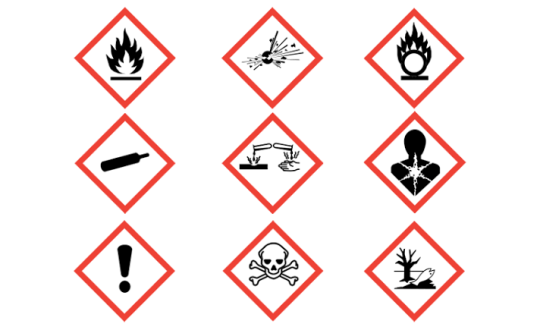
Chemical containers and storage containers are labeled using the Globally Harmonized System (GHS), which includes:
- Product identifier
- Signal words (such as *Danger* or *Warning*)
- Hazard statements
- Precautionary statements
- Hazard pictograms
- Manufacturer information
These labels help users understand chemical hazards and appropriate precautions.
For more information about identifying hazardous materials, visit our Hazard Communications webpage.
University employees are required to obtain EH&S approval prior to procuring hazardous materials. EH&S will work with departments to ensure the chemical can be safely stored, that handling procedures are in place, determine proper personal protective equipment (PPE) that might be required to handle the material, handler training, and any other environmental or safety considerations are addressed.
Departments may also need to consider the cost of future disposal when purchasing hazardous materials.
For more information on hazardous materials' procurement, please visit the EH&S website.
Accidents happen. If a hazardous material is spilled or released into an area it may endanger other people or cause environmental damage, it is critical to act quickly to reduce the threat. If you know what the chemical is and are trained in its handling, take the necessary steps to reduce the spread and/or clean up the spill. If you are unsure what the chemical is or the spill involves an active chemical reaction, keep people away and call 911 or EH&S at (707) 664-2100 (for non-emergency spills) for support.
For more information on spill or release response, visit the Hazardous Materials Spill webpage.
As a public university, Sonoma State has the responsibility to ensure hazardous materials are safely disposed of properly. These requirements apply to everything from dangerous chemicals to batteries and prescription medications. EH&S coordinates safe material disposal for most hazardous materials with a local contractor, who identifies the proper and safe means and manner of disposal for chemicals, hazardous building materials, and other sources of hazardous waste.
Disposal of batteries and other e-waste, including computers and peripheral electronic equipment, is coordinated by Facilities Management. Submit a work order for assistance with e-waste.
Contact the Student Health Center for advice regarding proper disposal of prescription medication and other medical waste.
Visit our Hazardous Waste Management webpage for more information.